
There are so many styles and features out there that makes choosing the right hearing aid feel like a complete mystery. Through our experience, it is very common for people to think “where do I even start” – and that is why working with an experienced audiologist who can take the time to understand how you live, what you enjoy and what feels comfortable for you, so you end up with hearing support that genuinely fits your life.
In this guide, we’ll go through the main types of hearing aids, what makes them different, and the key things to keep in mind as you decide what’s right for you.
UNDERSTANDING YOUR HEARING NEEDS
Before you choose a hearing aid, it’s really important to understand what your ears are experiencing day to day. Many people come to us feeling unsure or even a little worried – so that is why we start with a thorough hearing test, not just to gather information, but to give you clarity and peace of mind.
During the test, we learn things like:
- The degree of your hearing loss
- Which sounds or frequencies are harder for you to hear
- Whether hearing aids can help and which types might feel most comfortable and natural for you
Your hearing story is uniquely yours. There’s no one‑size‑fits‑all solution and you don’t have to figure it out alone. We’re here to listen, guide and help you find the support that truly fits your life.
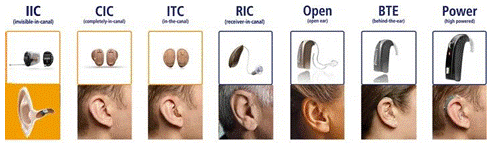
BEHIND THE EAR (BTE) HEARING AIDS
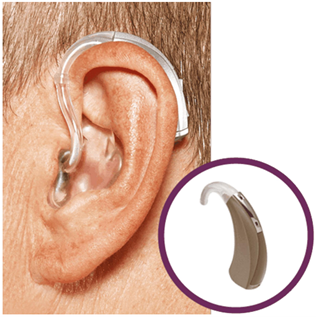
Behind‑the‑ear hearing aids are the most popular choice. They sit comfortably behind your ear, they’re simple to look after and they give you plenty of power if you need a bit more volume or clarity in everyday life.
Best for:
- Mild to severe hearing loss
- Anyone who wants strong, reliable amplification
- People who prefer something easy to handle and clean
Benefits:
- Comfortable and dependable for day to day wear
- Larger battery options, so you’re not constantly swapping them out
- Straightforward to use, even if you’re brand new to hearing aids
- Clear, natural sound quality that helps you feel more connected
If you’re trying hearing aids for the first time, BTE models are often a great place to start. They’re forgiving, easy to get used to and give you a reassuring mix of comfort and performance.
RECEIVER IN CANAL (RIC) HEARING AIDS
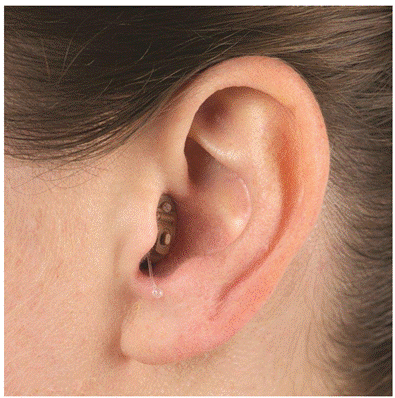
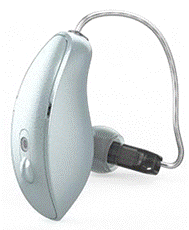
RIC models are slim, discreet and surprisingly comfortable. Many people tell us they forget they’re even wearing them after a little while. The small speaker sits gently in your ear canal, which helps everything sound more natural and less “mechanical”, especially when you’re just getting used to hearing more clearly again.
Best for:
- Mild to moderately severe hearing loss
- Anyone who prefers a subtle, barely‑there look
- People who want natural, true‑to‑life sound
Benefits:
- Small and lightweight, easy to wear all day
- Comfortable with consistently clear sound
- Minimal “plugged‑up” feeling, which many first‑time users find comforting
- Simple to adjust and personalise as you get used to them
We recommend RIC hearing aids to many first‑time users because they offer such a gentle introduction to better hearing. They’re discreet, feel natural and they make the transition into wearing hearing aids much easier and far less intimidating.
IN EAR (ITE) HEARING AIDS
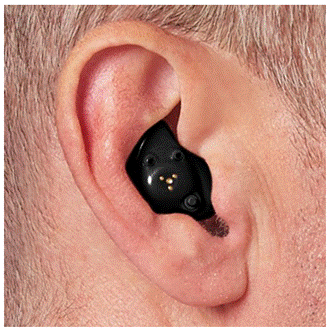
Many customers find in‑ear hearing aids to be a comforting option because they sit neatly inside the outer part of your ear and are made just for you. There’s something reassuring about knowing the device is shaped to fit your ear, not anyone else’s.
Best for:
- Mild to moderate hearing loss
- People who like the idea of a custom‑made device
- Anyone who prefers something that’s less noticeable
Benefits:
- Custom‑moulded to your ear, so they feel secure and familiar
- Easy to insert and remove without any fiddling
- A good choice if tiny devices feel too tricky or overwhelming
- Powerful enough to support many different hearing needs
ITE hearing aids offer a gentle, balanced introduction to better hearing. They’re discreet, they’re comfortable and they’re designed to help you ease into better hearing at a pace that feels right for you. You don’t have to figure any of this out on your own. Our team has helped hundreds of customers going through the same process and we’re here to guide you, answer your questions and help you feel supported every step of the way.
INVISIBLE IN CANAL (IIC) AND COMPLETELY IN CANAL (CIC)
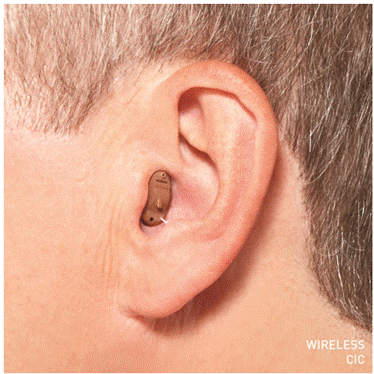
If you’re feeling especially anxious about people noticing your hearing aids, these tiny in‑canal models can offer a lot of comfort. They’re among the smallest options available and sit deep inside the ear canal, so most people won’t see them at all. For many first‑time users, that sense of privacy can make the whole experience feel a little less daunting.
Best for:
- Mild to moderate hearing loss
- People who want a device that’s virtually invisible
- Active lifestyles where a secure, tucked‑away fit feels reassuring
Benefits:
- Hard to spot when worn, which can ease worries about visibility
- Often very comfortable once fitted, helping you forget they’re even there
- No external parts, so everything feels neat and contained
Considerations: Because they’re so small, these models may use smaller batteries and have fewer features than larger hearing aids. But if your biggest concern is keeping things discreet and easing into this journey gently, they can be a really comforting choice.
RECHARGEABLE vs. DISPOSABLE BATTERIES
No matter which hearing aid style you’re drawn to, one of the key decisions you’ll make is how you want it to be powered. Some people love the simplicity of rechargeable models, while others feel more comfortable with traditional batteries; there’s no right or wrong choice, just what fits your life best.
Rechargeable Hearing Aids
- Easy to use: charge overnight and you’re ready for the day
- No need to handle or replace tiny batteries
- Often provide longer daily use on a single charge
Disposable Battery Hearing Aids
- A familiar option if you’re used to changing batteries
- Lower upfront cost
If you’re not sure which option suits you, that’s completely okay. Our audiologists will talk you through both choices and help you find the one that feels most comfortable and manageable for your daily routine.
FEATURES TO CONSIDER
Today’s hearing aids come with a range of features designed to make everyday life feel clearer, easier and more comfortable. You don’t need to know how everything works right now, that’s what we’re here for, but it can be reassuring to know what’s possible.
Noise reduction – Improves clarity in busy places, helping speech stand out so conversations feel less tiring.
Bluetooth connectivity – Lets you connect directly to your phone, TV or tablet, to make calls, music and shows easier to enjoy.
Custom programmes – Allows your hearing aids to adjust to different environments, such as restaurants, outdoors or quiet rooms, so you feel supported wherever you are.
Telecoil (T‑Coil) – Helps you hear clearly in public spaces with hearing loops, such as theatres, churches and some shops.
During your appointment with us, we will talk about these features in a simple way to find out which hearing aids will match you needs and lifestyle.
HOW TO CHOOSE THE RIGHT HEARING AID
When deciding which hearing aid is right for you, think about:
- Your degree of hearing loss
- Your daily lifestyle and communication needs
- Comfort and visibility preferences
- Battery and maintenance preferences
- Budget and technology features
WHY PROFESSIONAL HELP MATTERS
Choosing a hearing aid isn’t just about picking a device, it’s about finding something that truly fits you.
Your hearing, your ear shape, your lifestyle, your goals… they’re all unique, and your hearing care should reflect that. You don’t have to figure any of this out on your own because we will be there to guide you through it gently and at your pace.
At Vons Hearing Clinic in Beverley, you’ll receive:
- A professional hearing test
- Personal recommendations tailored to your needs
- Demonstrations of different styles so you can see what feels right
- Ongoing support and adjustments as you settle in
- Patient‑first care focused on your comfort every step of the way
We’re here to make this journey feel calm, supportive and reassuring; never rushed or overwhelming. You’re in safe hands!
Ready to find the right hearing aid for you?
If you’ve started to notice little changes in your hearing, or you’ve simply been wondering whether hearing aids might help, now is a really good time to reach out.